

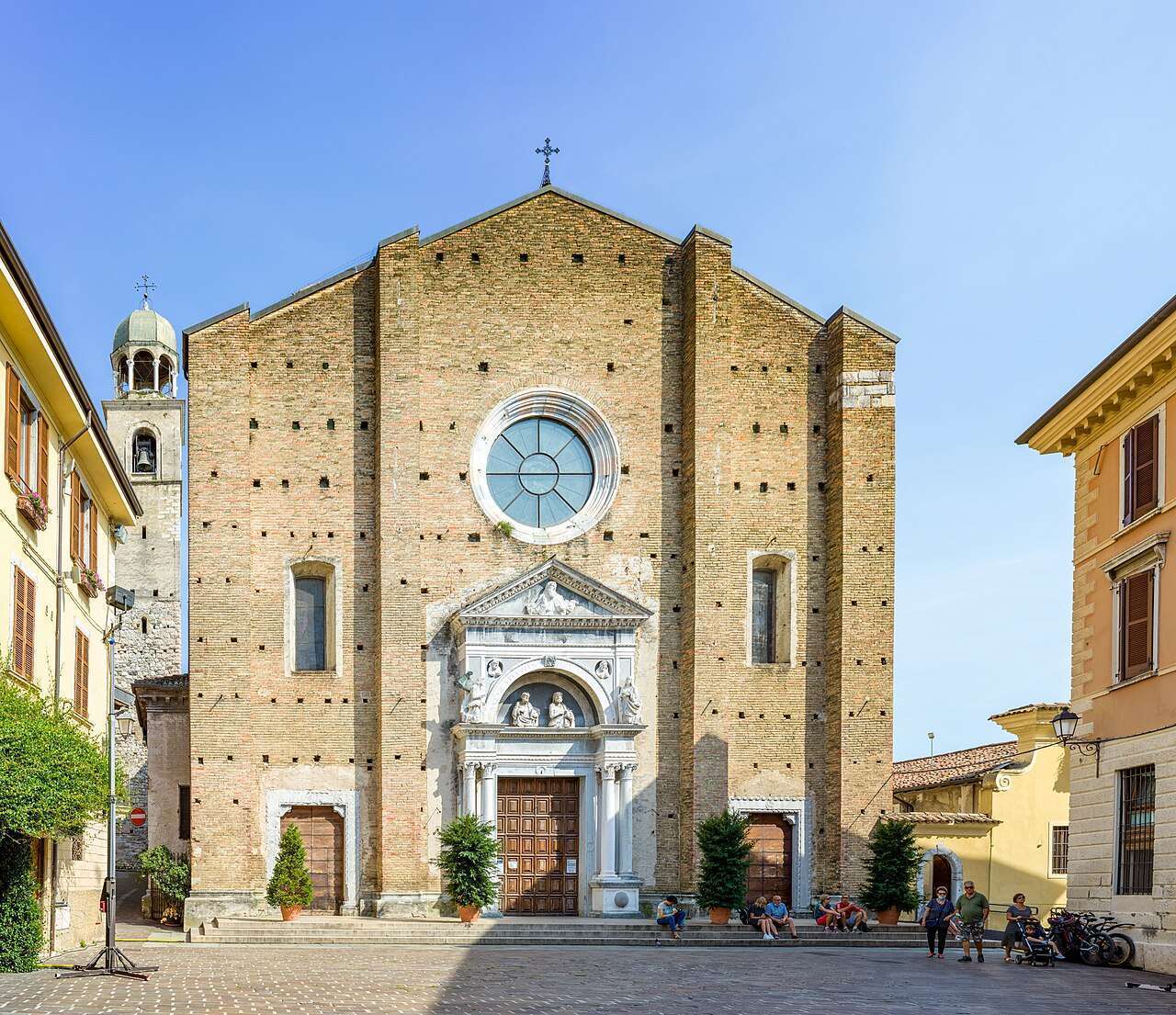
Cathedral of Salò
Salò
Five centuries of Brescian art among Gothic and Renaissance naves: the Duomo houses works by Moretto, Romanino and an Antegnati organ.
History and Architecture
The Cathedral of Salò, dedicated to Santa Maria Annunziata, is the largest church on the western shore of Lake Garda and one of the most significant Gothic buildings in the province of Brescia. Its construction began in 1453 according to a design by Filippo delle Vacche, replacing a Romanesque parish church that had become inadequate for Salò’s growing importance as the capital of the Magnifica Patria.
The façade, left incomplete in its upper sections, features a Renaissance marble portal in Botticino stone attributed to Gasparo Cairano (early 16th century), decorated with cherubs, garlands, and classical motifs of remarkable refinement. The central rose window and Gothic moldings coexist with already Renaissance elements, testament to the decades of work that separate the beginning from the completion of the building.
Artistic Heritage
The three-nave interior, with ribbed vaults and cylindrical pillars, houses an outstanding artistic collection. The altarpiece of the main altar is a Deposition attributed to Paolo Veneziano (14th century); in the side chapels are works by Zenon Veronese, Romanino, and Moretto da Brescia—three masters of Brescia Renaissance painting. The gilded wooden polyptych of the Most Holy Sacrament chapel, a work by a German carver from the late 15th century, is one of the rarest pieces.
The Antegnati organ, built by the renowned Brescia organ-building family in 1489 and restored multiple times, is still functional and used for concerts of sacred and Baroque music, especially during the summer months. Its warm and profound voice fills the naves with a sonority that has spanned five centuries.
Recent Restoration and Visiting Information
The 2004 earthquake caused significant damage to the structure, requiring a restoration intervention that lasted several years. Today the Cathedral has returned to its former splendor, with restored artworks and consolidated decorative elements.
Entry is free. It is recommended to visit in the morning hours, when light streams through the stained glass, illuminating the naves with warm tones. The Cathedral is located in the heart of Salò, just a few steps from the waterfront and the MuSa museum.


