

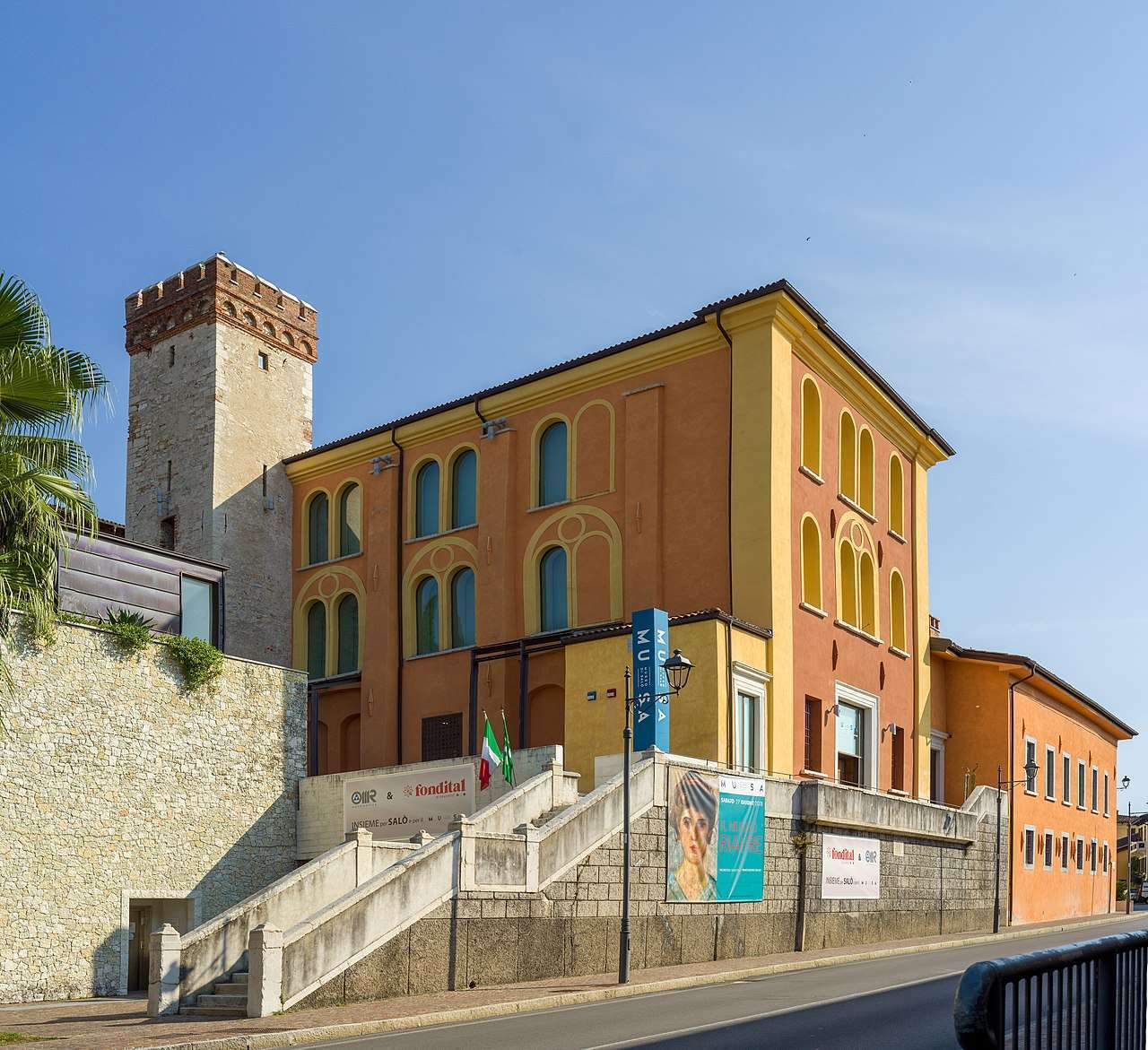
MuSa — Salò Museum
Salò
Art, music and memory in a fourteenth-century convent: the museum of Salò celebrates the Magnifica Patria and the violin of Gasparo da Salò.
History and Setting
In the heart of Salò, overlooking the widest gulf of Lake Garda, MuSa — Salò Museum occupies the former convent of Santa Giustina, a 14th-century building restored with contemporary interventions that create an effective dialogue between ancient and modern. Inaugurated in 2015, the museum tells the story of Salò and western Garda through a path that intertwines art, history, music, and memory.
Historical Collections
The historical section retraces the city’s most significant chapters: from the foundation of the Magnifica Patria — the community of Garda municipalities that from 1426 to 1797 enjoyed broad autonomy under Venetian protection — to the most controversial period, that of the Italian Social Republic (1943-1945), when Salò became the nominal seat of Mussolini’s government. The museum addresses this chapter with documentary rigor, displaying original materials without rhetoric or justification.
Gasparo da Salò and Musical Heritage
The section dedicated to Gasparo da Salò (1542-1609) deserves an extended visit: the Salò master luthier is considered among the inventors of the modern violin, and the museum preserves documents, instruments, and reconstructions that illustrate the local violin-making tradition. A multimedia room allows visitors to listen to the sound of historical instruments.
Art Collections and Visitor Information
The art collection comprises paintings from the 15th to the 20th century, with works from the Brescia and Venetian schools, plus a contemporary art section with temporary exhibitions that change each season. The restored cloister, open to the public, hosts cultural events, concerts, and literary presentations during summer. The visit lasts approximately 90 minutes. The museum is open Tuesday through Sunday and is located just steps from Salò’s waterfront, easily combined with a stroll through the historic center and a visit to the Cathedral. The entrance is accessible to people with reduced mobility. The bookshop offers a curated selection of publications on local history.


