

Palazzo Feltrinelli — Gargnano
Gargnano
Neo-Gothic architecture and Italian history on the Gargnano lakefront: the Feltrinelli palace, from a banker's residence to Mussolini's seat of power.
Architecture and Design
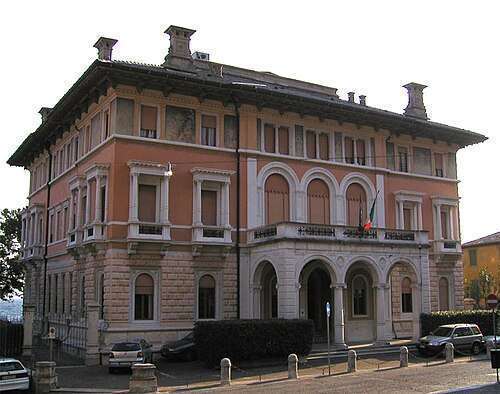
Along the lakeside promenade of Gargnano, half-hidden among the cypress and cedar trees of a historic park, Palazzo Feltrinelli is a work of neogothic architecture that seems to have stepped out of a nineteenth-century novel. Built between 1898 and 1903 on commission from banker and entrepreneur Giacomo Feltrinelli for the sum — colossal for the time — of one million gold lire, the palace was designed by architect Alberico Belgiojoso in a style that blends Venetian gothic elements, floral decorations, and panoramic loggias.
The building spans three floors with a 100-meter facade that slopes down toward the lake. The pointed arch windows, double windows, pinnacles, and crenellations recall the palaces of gothic Venice, while the covered terraces and bow windows reveal an international taste that drew inspiration from English cottages and residences of the French Riviera.
A Turning Point in History
The palace’s history took an unexpected turn in 1943, when Benito Mussolini — installed by the Germans as head of the Italian Social Republic — made it his personal residence. For twenty months Gargnano became the center of power for the RSI, and Palazzo Feltrinelli hosted the dictator’s offices and accommodations. Traces of this period are scarce but documented: the palace retains the room layout of that era, although original furnishings were largely dispersed after the Liberation.
Modern Use and Visiting
Since 1946 the building has been owned by the University of Milan, which uses it as a venue for congresses, seminars, and summer courses. The surrounding park, with centuries-old trees and direct views of the lake, is one of the most elegant historic gardens on Lake Garda.
The palace is not regularly open to the public, but can be visited during FAI heritage days, extraordinary university openings, and certain cultural events. The exterior and park, however, are always visible from the Gargnano waterfront, and deserve a stop during a walk through the village. It is recommended to check the events calendar on the University of Milan website.


