

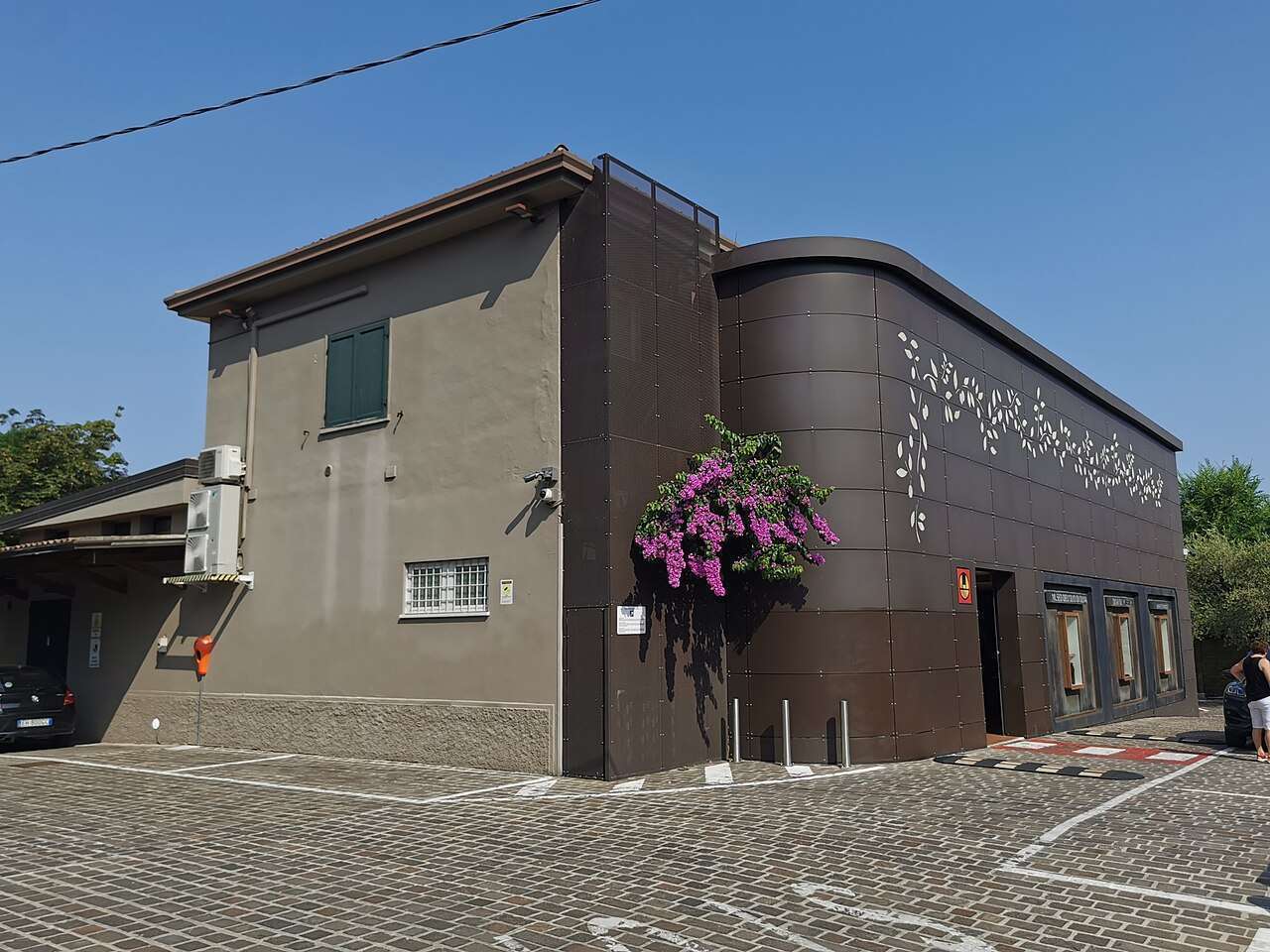
Olive Oil Museum
Bardolino
The green gold of Lake Garda: in a nineteenth-century mill, the thousand-year history of olive oil unfolds among millstones, presses and tastings.
A Thousand-Year Tradition on Lake Garda
In Cisano di Bardolino, within a carefully restored nineteenth-century olive mill, the Olive Oil Museum documents a tradition with millennial roots on the eastern shores of Lake Garda. Olive cultivation on these banks is attested since Roman times: Pliny the Elder, in the 1st century AD, already praised the quality of Garda oils, and the casaliva variety — native to the lake — is considered among the oldest Italian cultivars.
The Production Process Through the Centuries
The museum itinerary, spread over two floors, displays the entire extra virgin olive oil production chain: from olive harvesting with nets and combs, to crushing with stone mills, to pressing with screw presses, through to storage in terracotta jars and subsequently in metal containers. The tools on display span a period from the 17th to the 20th century, showcasing the technological evolution of a process that remained artisanal for a long time.
The Garda DOP and the Casaliva Variety
A room is dedicated to the Garda DOP, obtained in 1997, which protects oil produced in three sub-zones — Bresciano, Orientale, and Trentino. One learns that the lake’s microclimate, with mild winters and constant breezes, allows the olive tree to grow at unusually northern latitudes — Lake Garda marks the northern limit of olive cultivation in Europe. The casaliva variety, predominant on the eastern shore, produces oil with delicate fruity notes, with hints of almond and artichoke, suited to lake dishes and Garda cuisine. The museum also offers information panels on pruning, olive tree diseases, and oil tasting techniques — because extra virgin oil, like wine, has a precise sensory vocabulary: fruity, bitter, peppery, and defects are recognized by the nose before the palate.
Visit Information
The visit concludes with a guided tasting of the house’s oils, accompanied by local bread. Entrance is free, the museum is open year-round and has a shop selling oils, condiments, and local products. It is located 2 km from Bardolino, along the Gardesana road, with ample parking.


