

Lemon House of Castel
Limone sul Garda
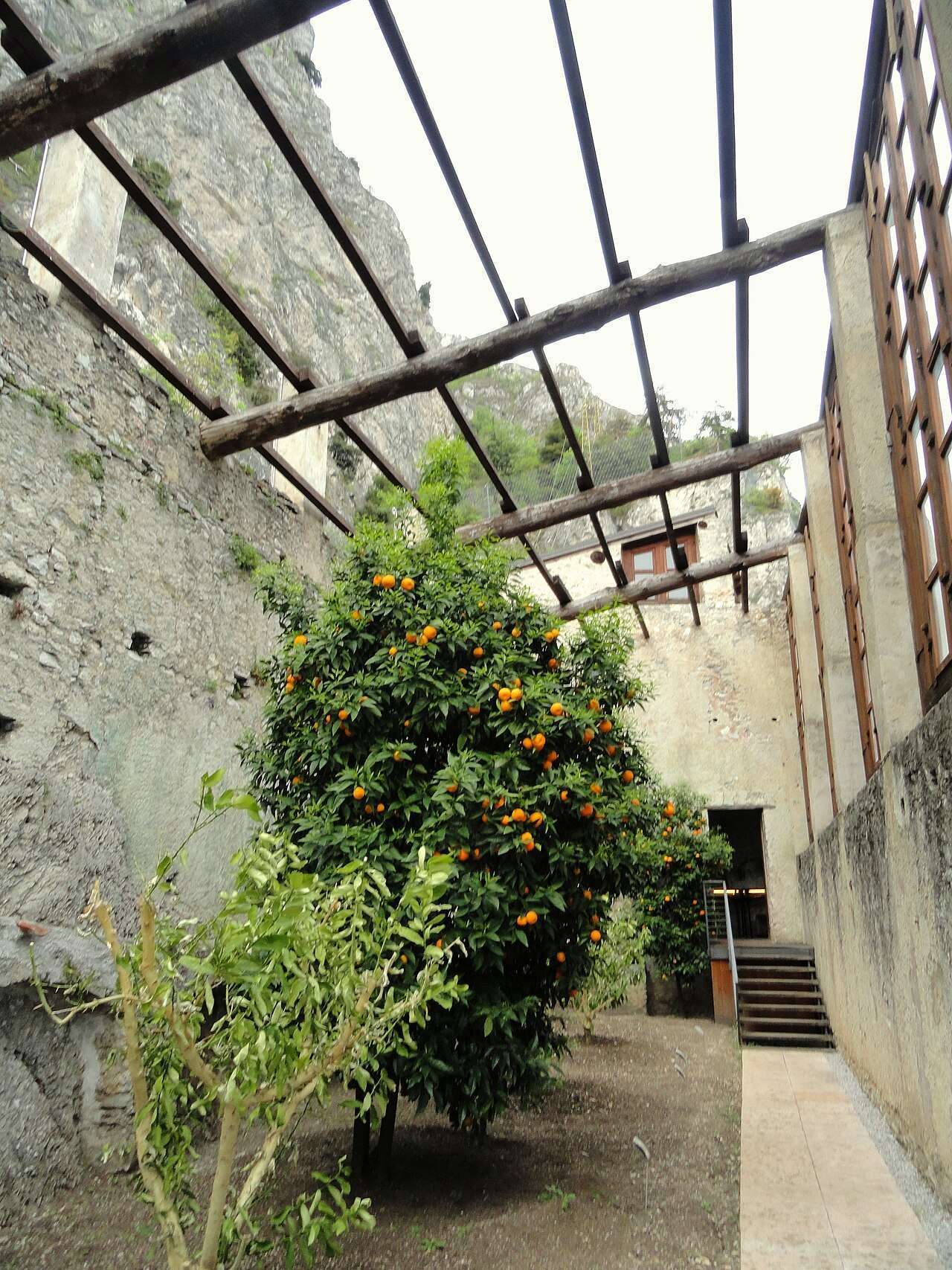
Citrus at 45 degrees north: inside the eighteenth-century lemon house of Limone, where the Garda microclimate defies all latitude.
A Distinctive Landscape Feature
On the western shore of Lake Garda, between Gargnano and Limone, the lemon houses are the most distinctive feature of the landscape: terraced structures with tall stone pillars and wooden beams, designed to protect citrus fruits from winter cold and exploit every available ray of sunshine. The Lemon House of Castel, in Limone sul Garda, is one of the best-preserved examples and the only one still visitable with productive plants.
A History of Cultivation
Lemon cultivation on Lake Garda began in the 13th century, likely introduced by Franciscan monks from the Gargnano convent. The lake’s microclimate—with temperatures that rarely drop below freezing—made possible what latitude should have prevented: the growth of citrus fruits at 45 degrees north, the northernmost point in the world for their open-air cultivation. The lemon houses were true agricultural machines: stone pillars, up to 10 meters high, supported beams on which wooden boards and glass panes were placed in winter, transforming the terrace into a greenhouse. In spring, the covering was removed and the lemons ripened in the summer sun. This system, locally called casèla, required constant maintenance and skilled labor, passed down from father to son.
The Lemon House Today
The Lemon House of Castel dates back to the 18th century and preserves its original layout intact. The lemon, citron, and bitter orange plants—some centuries old—continue to produce fruit, and the fragrance that fills the rows is intense and real, not a reconstruction. Informational panels illustrate cultivation techniques, the commercial history of Garda citrus fruits, and the decline of the activity in the 19th century, when competition from Sicilian citrus fruits and the appearance of gummosis—a fungal disease—made the enterprise no longer profitable.
Practical Information
The visit lasts approximately 30 minutes. The lemon house is open from April to October and can be reached from Limone’s town center by a short uphill walk. The path is not wheelchair accessible. The ticket includes a tasting of limoncello produced from the facility’s lemons. A visit during midday hours is recommended, when the sun illuminates the terraces and the fragrance of the citrus fruits is most intense.


