

Manerba Rock
Manerba del Garda
Ninety hectares of archaeology and nature: the Rocca di Manerba, a promontory with 360-degree views spanning the Bronze Age to the Middle Ages.
A Natural and Archaeological Treasure
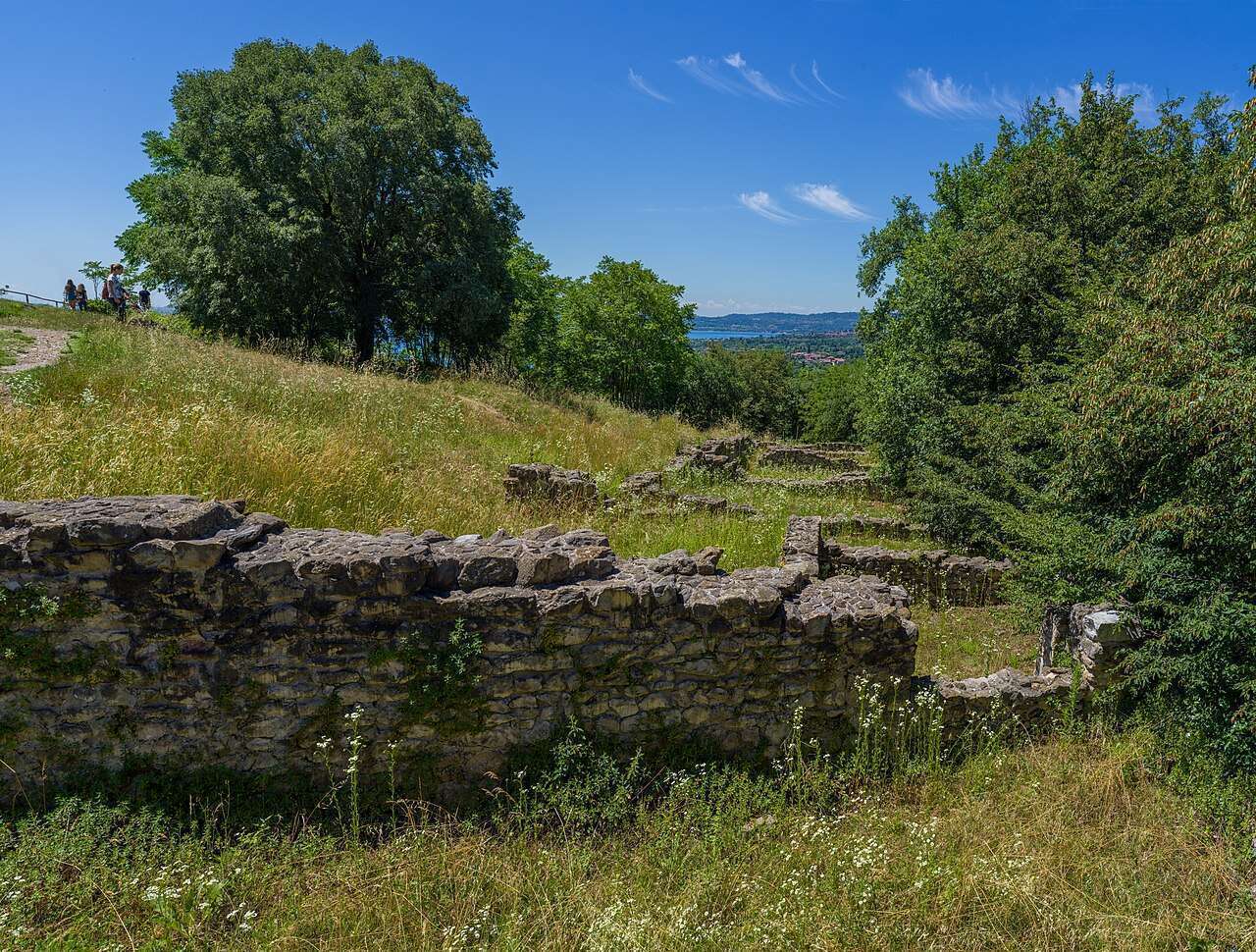
Manerba Rock is a limestone promontory that juts into the lake like the bow of a ship, reaching 216 meters in height above the shoreline below. At its summit, the remains of a medieval fortress destroyed in 1575 by order of the Venetian Republic blend with traces of settlements dating back to the Bronze Age, making this location one of Lake Garda’s most stratified archaeological sites.
The Archaeological and Nature Park
The Archaeological and Nature Park of Rocca, established in 2003, protects and enhances a 90-hectare area that includes the rock formation, the sheer cliffs overlooking the lake, forests of holm oak and downy oak, and beaches at the base of the promontory. The Visitor Center, located at the park entrance, displays artifacts discovered during excavations: Bronze Age ceramics, Iron Age bronze fibulae, Roman coins, and medieval architectural fragments.
Medieval Fortress and History
The medieval fortress—of which perimeter walls, the base of a tower, and a cistern remain—was built in the 11th century and controlled the Gulf of Manerba and navigation in the central-southern part of the lake. Its destruction, ordered by Venice after the castle had become a hideout for bandits, was so thorough that the stones were partly reused for construction in the town below.
Visiting and Nature
The visit to Manerba Rock takes approximately one and a half hours, with an elevation gain of 200 meters on a well-marked trail. The summit offers an unrivaled panoramic view of Lake Garda: to the north the Trentino mountains, to the east the Verona shoreline with Lazise and Bardolino, to the south the plains, and to the west Garda Island and the Sirmione peninsula. At sunset, the profile of the Rock stands out against the light, creating one of the lake’s most photographed natural spectacles. The flora includes Mediterranean species—holm oaks, alaterni, terebinths—growing on south-facing cliffs, alongside alpine species on shaded northern slopes. Birdwatching enthusiasts will find the cliffs host nesting peregrine falcons and cormorants. Park access is free and available year-round. Parking is located at the base of the promontory. It is advised to bring water and suitable footwear for the trail.


